Baobab News, Baobab Research, Baobab Talks, News and more
Baobab Research – mapping young refugees’ social networks
18 Jun 2026
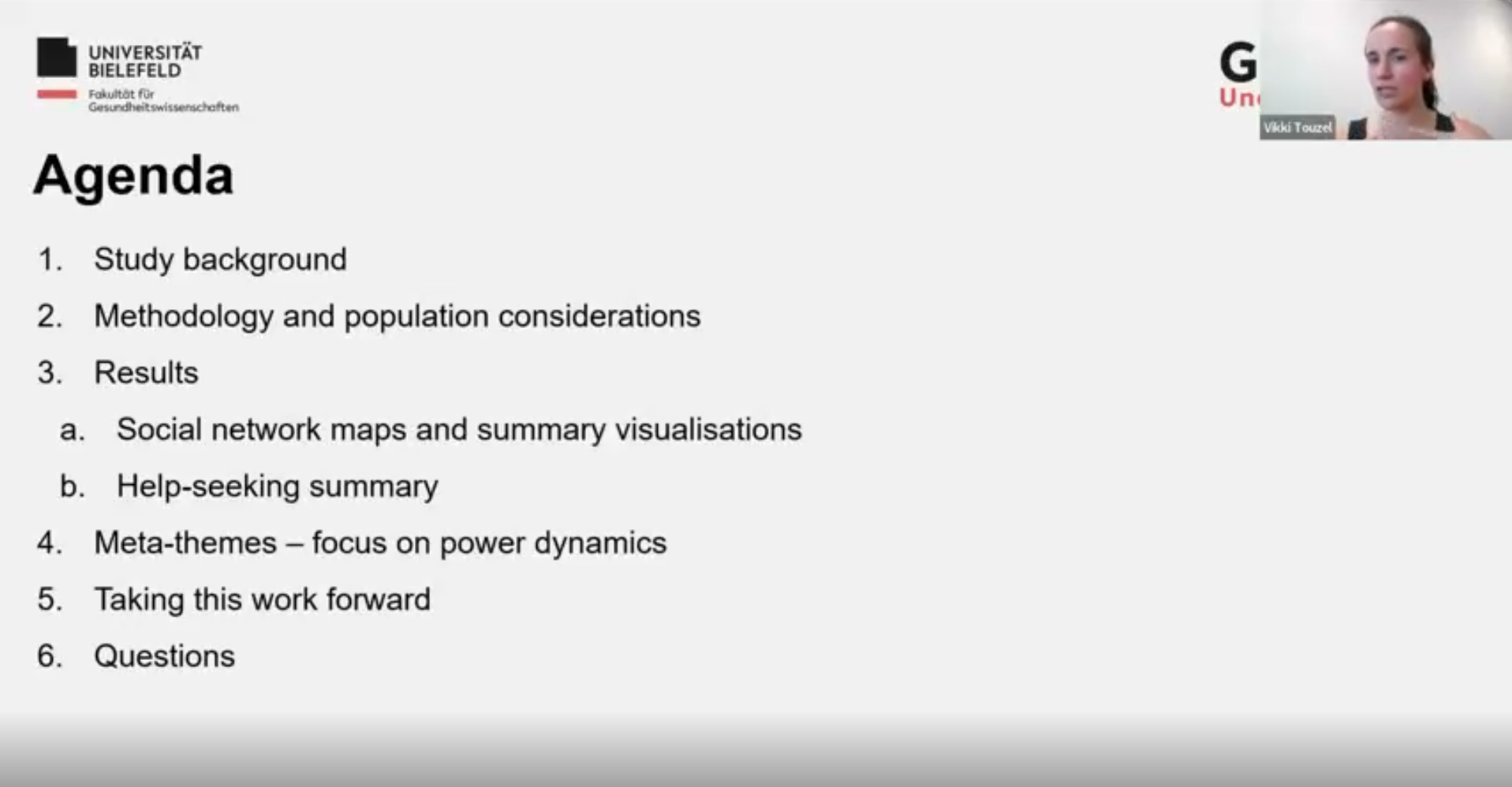
Baobab hosted its first ever research webinar yesterday — proudly presenting Victoria Touzel, a Public Health PhD candidate at the University of Bielefeld (Germany), who has conducted brilliant research with the young people from the Baobab community.
The project is a feasibility study testing how to map the social networks of unaccompanied refugee young people, focusing on their friendships, social systems and the people that help them navigate life in London. It explores who the young people turn to for help, which kind of help, the role played by absent (distant) figures of support, and the many difficulties our young people experience in building networks of support, even after many years in the UK. The project raises all sorts of questions, from the role charities like us can play in “building bridges” — helping young people build networks of support outside of our organisation — to how Baobab’s holistic model of work (where support is therapeutic, casework, relational and community-based) is actually experienced by young people, to how unacknowledged power dynamics come to shape interviews and findings.
A recording of the event is available here:
OR
As with all research projects at Baobab, Vikki’s findings have already been disseminated to the team for further reflections and developments of our services. We will also be engaging in a larger study, rolling out the tools designed for this study to our whole population, driving further reflections down the line.
This is what good research should do — challenge us all in the sector (third sector, government, social care, educators, etc.) to improve practices and frameworks and, in the end, drive better policy-making. Vikki’s research throws essential light on the barriers to building nurturing relationships that young people who have arrived unaccompanied to the UK encounter — barriers that are too often systemic, but also linked to internal world difficulties due to adverse experiences that may have fundamentally impaired these young people’s ability to build relationships.
It challenges us all to simply do better to help them rebuild their capacity to engage fully and joyfully with the world.